


Often it doesn’t, and many homeowners have never checked. On site visits around Moscow and Pullman this year we’ve found fans that likely weren’t venting outside, fans where nobody knew where the duct went, and bathrooms with no fan at all. If the duct ends in the attic or inside a wall, the fan is just moving wet air somewhere you can’t see it.
What we’ve found on Palouse site visits
- A 1910 farmhouse with a newer primary suite: the fan in the main bath likely wasn’t venting outside properly. The only way into that attic was through a bedroom and a long crawl, so nobody had looked at the duct in years.
- A 1950s house with no attic or crawl space access: the hall bath had no fan. Adding one meant a new circuit and a new hole through the roof.
- A house over 100 years old: the upstairs bath needed a fan run through a tight crawl space, turned up, and out through the roof.
- A remodel this fall where a new fan was already in the plan: we still wrote “check that the duct vents outside” into the design phase. You can’t tell from inside the bathroom.
Why it matters
A shower puts a lot of water into the air, and the fan is there to get it out of the house. When the duct ends in the attic, has come loose, or was never hooked up in the first place, the warm, wet air hits cold wood and insulation. Over time you can get damp insulation, stains and possibly mold in places you won’t see until a ceiling gets opened.
Sometimes the moisture comes from the roof
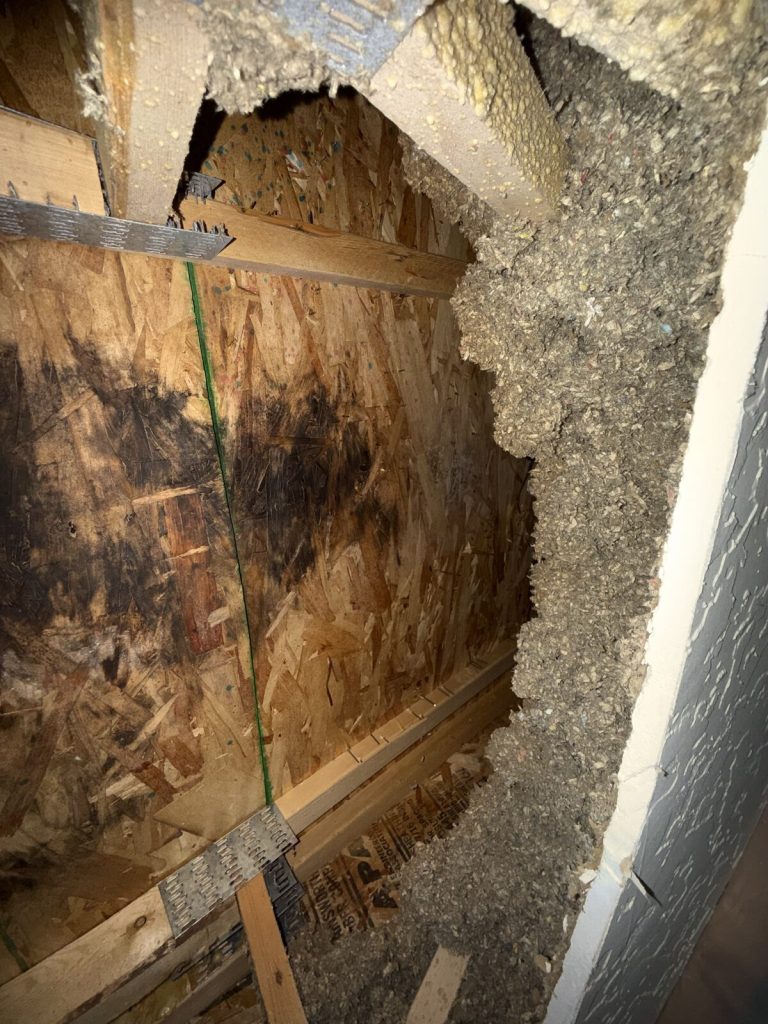
On a Moscow bathroom remodel this summer, we opened the ceiling over the shower and found the roof sheathing soaked and moldy. In this case, the likely cause was bad flashing where two roof sections meet. The shingles had been replaced a couple of years earlier, but the old sheathing was never checked. Whether it’s the fan or the roof, we open the ceiling and find the source before we close it back up.
How to check your fan
- Turn the fan on and go outside. Look for a vent cap on the roof or an outside wall with its flap open. If you can’t find one, the fan may not vent outside.
- Hold a tissue up to the grille. If the fan can’t hold it there, it isn’t moving much air.
- If you can get into the attic safely, look for a duct running from the fan to the outside, connected at both ends. If the duct ends in the insulation, the fan is venting into the attic and not venting outside like it should.
If your attic is hard to get into, have it checked during your next project.
What we do about it
When we remodel a bathroom, the fan is part of the plan from the start. Checking where the duct goes is part of our design phase, along with drain sizes and plumbing access.
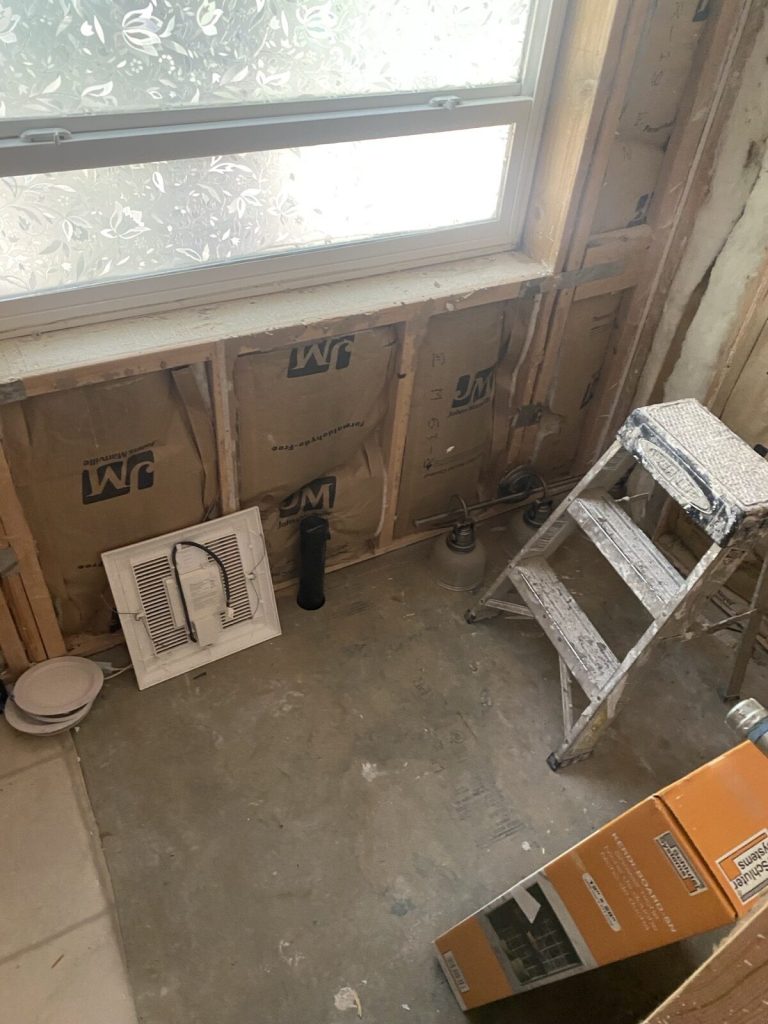
On most bathrooms we install:
- A Panasonic WhisperCeiling fan with an LED light. It’s very quiet and has a speed selector (50, 80 or 110 CFM), so we can size it to the room.
- A timer switch, so the fan keeps running after you leave and then shuts itself off. We recommend leaving it on for 45-60 minutes following a shower.
- Insulated duct run outside through the roof, out an eave, or through the rim joist on a basement bath. Never into the attic.
- Spray foam around the fan housing and insulation over the top of it in the attic, so the fan doesn’t leave a cold spot in your ceiling.
Adding a fan where there wasn’t one takes more work. It usually means a new circuit, a cutout between ceiling joists to run the wire, and a new hole through the roof. In a house with no attic access, we plan the route before we cut anything. Depending on where you live, the roof penetration may need a permit.

When to call someone
- You can’t find where your fan vents.
- You see stains, peeling paint or mold on the bathroom ceiling, especially over the shower.
- The fan is loud or weak, or it can’t hold a tissue.
- You’re already planning a bathroom remodel. Fixing the duct while the ceiling is open costs far less than coming back for it later.
If you’re planning a bathroom remodel in Moscow, Pullman or anywhere on the Palouse, start with a free consultation. If you move ahead with a design agreement, finding out where your fan duct goes is part of the design phase.
Our Proven Process
Making Renovations Easy as 1-2-3
At Cherry On Top, we believe clear communication and a shared vision are key to success. Our simple three-step process aligns expectations, answers questions, and sets the stage for a remodel you’ll love.

Site Visit
We start by visiting your home to understand your space, listen to your goals, and gather all the details we need to bring your vision to life.

Sign Agreement
Once we align on scope and expectations, you’ll sign a design agreement so we can create a detailed plan for your project.

Start Planning
This is when the fun begins! We help you choose materials, finalize layouts, and prepare everything so construction is ready to start.

From Vision to Reality
Remodeling Without the Headaches
We believe your renovation should feel exciting, not exhausting. With Cherry On Top, you get one dedicated team from start to finish. No runaround. No surprises. Just quality craftsmanship, clear communication, and results you will love for years.