

Start by checking that the contractor is registered in your state and carries insurance. You can look both up online in a few minutes. Then pay attention to how the contractor handles your house: whether they check for hidden problems before they give you a firm price, and whether they put the work in a written contract that lists each part of the job.
Check state registration
Idaho requires contractors to register with the state for any job over $2,000 in labor and materials. To register, a contractor has to show proof of general liability insurance and proof of workers’ compensation coverage, or a statement explaining why they don’t need it. Idaho registration is handled by the Idaho Division of Occupational and Professional Licenses.
Washington requires contractors to register with the Department of Labor & Industries. The state’s Verify a Contractor tool shows whether a registration is active, whether the business has workers’ comp coverage for its employees, and any lawsuits against the contractor’s bond.
A contractor who works on both sides of the state line has to be registered in both states. If your home is in Pullman or anywhere else in Washington, check the Washington registration, not just the Idaho one. Our Idaho and Washington registration numbers are at the bottom of every page of our website.
Ask about lead paint if your home was built before 1978
Federal rules say painted surfaces disturbed during a remodel of a home built before 1978 must be treated as lead paint, with lead-safe work practices, unless a test shows the paint is lead-free. Lead dust from sanding, scraping or cutting old paint is easy to breathe in or swallow, and it can damage a young child’s developing brain. Ask any contractor you’re considering whether their firm is certified for lead-safe work.
Look for a contractor who checks before pricing
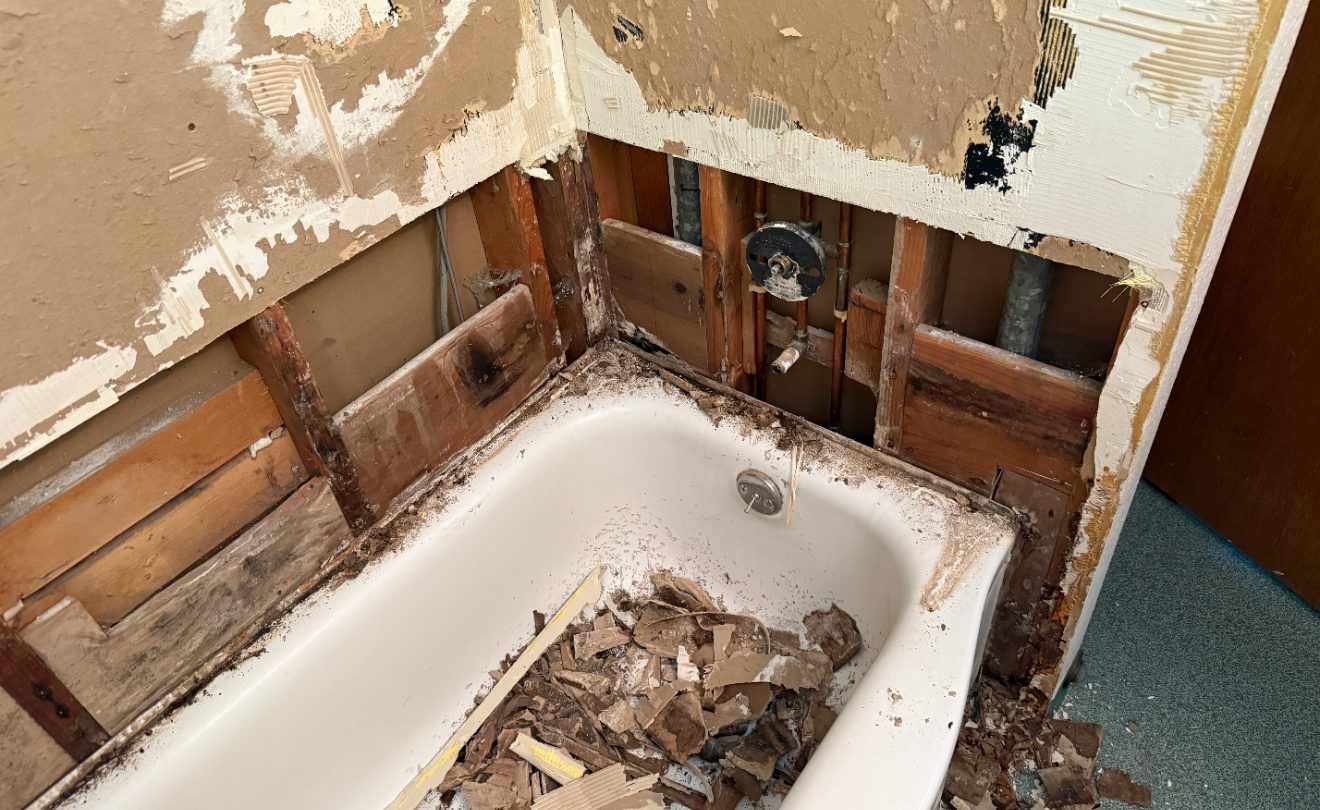
Many of the problems in a remodel are hidden until a wall, floor or ceiling is open. On site visits this year we found:
- A deck and roof built on a cantilever that was already bowing, with joists too small for the load and stairs that were failing.
- A beam that had rotted after siding was installed over it and trapped moisture.
- A deck ledger rotted from missing flashing, which an earlier contractor had missed.
- A gas line too small for the tankless water heater the owners wanted.
Each of these changed the plan and the price. When a firm price is set before anyone checks for problems like these, the difference can show up later as change orders, cut corners or an unfinished job. We check for these during the design phase, before a project is priced. That includes checking drain sizes, gas line sizes, plumbing routes and access, and whether vent fans actually reach the outside. It also covers framing and structural loads, with an engineer when needed, and what the building inspector will require. You can read how that works on our about page.
Get a written contract that lists each part of the job
A contract that lists the work item by item lets you see what each part costs. That makes it possible to decide what to keep, change or put off to a later phase without guessing. A contract that describes the job in one line leaves room for disagreement later about what was included.
Idaho adds two protections for homeowners. Before you sign a contract over $2,000 for work on your home, the contractor must give you a written disclosure about your rights under Idaho’s lien law and keep a copy you’ve signed. Before you make the final payment, the contractor must give you a signed list of every subcontractor, supplier and equipment rental company that provided more than $500 of work or materials on your project, so you know who could file a lien if they weren’t paid.
Read the reviews and the contractor’s responses
Search the contractor’s name on Google and read what past customers wrote. Read the contractor’s responses too. How a business answers a complaint tells you how it will handle a problem on your job.
Ask which parts of the work you can do yourself
A good contractor will tell you which parts of a project you can take on to save money if needed. On recent projects, homeowners have done their own demolition, dug deck footings, painted, and finished drywall, trim and flooring. We keep structural work, electrical, gas, plumbing and ventilation with licensed trades. Our post on being your own general contractor goes into more detail.
Be cautious when you see these
- No registration number, or one that doesn’t come up in the state’s lookup.
- A firm price after a quick look at a project with hidden work, like old framing, a deck, or a bathroom over older plumbing.
- Poor Google or social media reviews
- No written contract, or a contract that describes the whole job in one line.
- Calls and messages that go unanswered before you’ve even hired them.
A contractor who tells you your project is a better fit for someone else is being honest with you.
If you’re planning a remodel in Moscow, Pullman or nearby, we offer a free consultation. If you move ahead with a design agreement, we check the house for hidden problems during the design phase, before the project is priced.
Our Proven Process
Making Renovations Easy as 1-2-3
At Cherry On Top, we believe clear communication and a shared vision are key to success. Our simple three-step process aligns expectations, answers questions, and sets the stage for a remodel you’ll love.

Site Visit
We start by visiting your home to understand your space, listen to your goals, and gather all the details we need to bring your vision to life.

Sign Agreement
Once we align on scope and expectations, you’ll sign a design agreement so we can create a detailed plan for your project.

Start Planning
This is when the fun begins! We help you choose materials, finalize layouts, and prepare everything so construction is ready to start.

From Vision to Reality
Remodeling Without the Headaches
We believe your renovation should feel exciting, not exhausting. With Cherry On Top, you get one dedicated team from start to finish. No runaround. No surprises. Just quality craftsmanship, clear communication, and results you will love for years.