

Many homes from before the 1980s were built with asbestos in the floor tile, duct insulation or siding, and with lead in the paint. Many of those homes also have old galvanized steel water pipe, with copper pipe added during later repairs.
Asbestos and lead paint are much less of a risk if they’re left alone. The danger starts during a remodel, when cutting, sanding or tearing out old materials puts asbestos fibers and lead dust into the air the family is breathing. A copper pipe joined straight to galvanized pipe causes a different problem: the joint corrodes from the inside, where nobody can see it, and eventually begins leaking inside the wall.
Before you remodel an older home, have the painted surfaces and any suspect flooring or duct wrap tested, and have someone check where copper pipe meets galvanized pipe. Finding these before demo starts lets the plan work around them, which costs much less than finding them halfway through.
What we found on site visits this year
On site visits in Moscow and Pullman this year, we found possible asbestos or lead paint in three houses, and copper joined straight to galvanized pipe in three.
- A 1920s house had asbestos siding and asbestos wrap on the heating duct, and paint old enough that it likely contains lead.
- In a 1950s house, we told the owners the flooring and its glue could contain asbestos and the paint likely contained lead, and recommended testing both before demo.
- A 1960s house had 9-inch-square floor tile under newer flooring in the basement bathroom and the laundry room. Floor tile that size and age often contains asbestos. The same house had copper pipe connected straight to galvanized pipe.
- A 1970s house had copper water lines connected to short galvanized fittings behind the bathroom fixtures.
- In a basement where we built a new bathroom this year, most of the water line connections above a window had no fitting to keep the copper and galvanized pipe apart.
Asbestos is safest left alone
Asbestos is a mineral fiber that was mixed into floor tile, tile glue, duct insulation and siding for decades, because it’s durable and resists heat. When asbestos material is cut, sanded or broken, the fibers get into the air. Breathing them can cause lung cancer, mesothelioma and other lung disease, often 20 or more years later. Mesothelioma is a cancer of the lining around the lungs. Asbestos that is intact and left alone is much less of a risk.
Because the danger comes from disturbing asbestos, we don’t cut, grind or sand it. In the 1960s house, the old tile is in good shape, so we recommended building the new floors right over it instead of tearing it out.
Old duct wrap needs the same care as old tile. In the 1920s house, the owner had already pulled some of the asbestos wrap off the heating duct without a mask, and more wrapped duct still runs behind a bathroom wall. If you find old wrap on ducts or pipes, leave it alone until it has been tested.
Lead paint is likely in houses built before 1978
Lead paint is the other hazard that comes out during demo. Houses built before 1978 can have lead paint, usually under newer paint on trim, doors, windows and old beadboard. Lead paint becomes a problem when it turns to dust or chips, which happens when painted wood is sanded, scraped or cut. Lead dust is easy to breathe in or swallow, and lead builds up in the body.
Lead is most dangerous for young children and pregnant women, because it can damage a child’s developing brain and cause learning and behavior problems. In adults it can raise blood pressure and harm the kidneys. Because there were children living in the 1920s home and the owner planned to do the demo himself, we recommended a lead test before any demo.
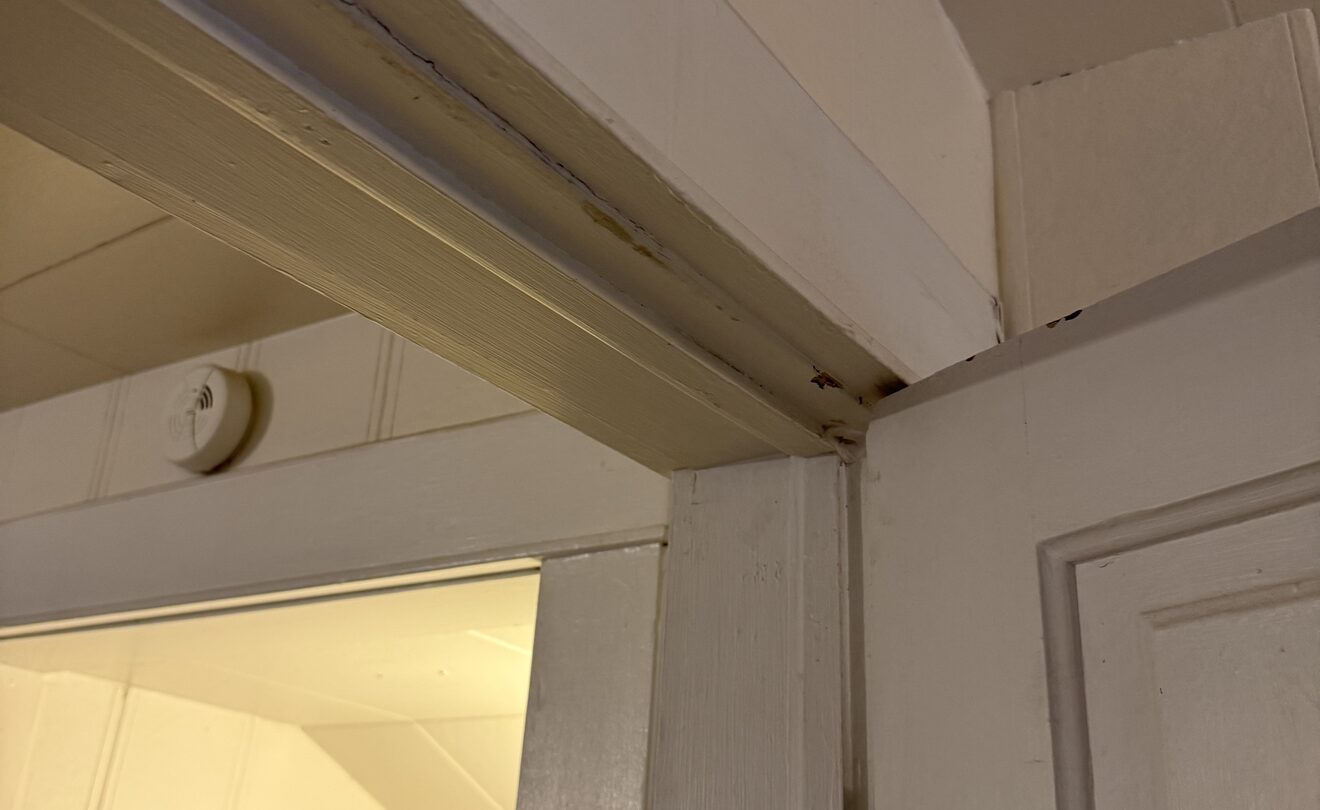
The next two photos are from the 1920s house. The first shows the trim around an old door, where layer after layer of paint has built up over the years. The second shows the top corner of a paneled door and the painted beadboard wall beside it.


Any of those layers of paint could contain lead, and there’s no way to tell by looking. Cherry On Top is an EPA Lead-Safe Certified Firm. In homes built before 1978, federal rules say painted surfaces we disturb must be treated as lead paint, with lead-safe work practices, unless a test shows the paint is lead-free. So we test painted surfaces before demo, and the result decides how we handle them. For another older house we visited this fall, we recommended the lead test as part of the design phase, before the old wallpaper comes off and a wall comes out.
Copper joined straight to galvanized pipe corrodes and leaks
Copper water pipe should not connect directly to galvanized steel pipe. Galvanized pipe is steel pipe coated with zinc to slow rust, and it was the usual water pipe in houses built before about 1960. When copper pipe was added during later repairs, it was often connected straight to the old galvanized pipe.
Where two different metals touch with water running through them, a small electric current flows between them, and the joint corrodes from the inside. Nobody sees the damage until the joint leaks. A leak inside a wall or above a ceiling can soak the framing and drywall for a long time before anyone notices.
The fix is a dielectric union. A dielectric union is a fitting with a plastic washer and sleeve inside it, which keep the copper and the steel from touching. Every connection between copper and galvanized pipe needs one. The drawing below shows both kinds of joint.
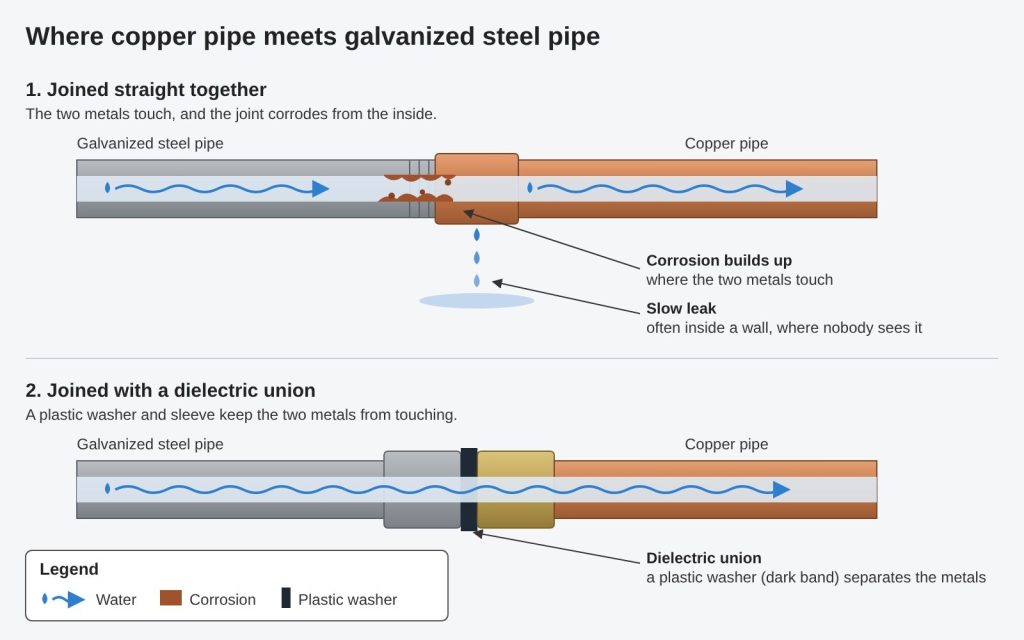
In the 1970s house, the short galvanized fittings behind the bathroom fixtures were joined like the top of the drawing, and we told the owner they were likely to cause a leak. We recommended switching those short pieces back to copper whether or not the rest of the bathroom changed. In the 1960s house, we recommended replacing the galvanized pipe while the bathroom walls are open, when it’s easiest to reach.
In the basement bathroom, our plan for the new plumbing took out most of the connections above the window, including the ones with no dielectric union.
Test before demo, not during it
Asbestos, lead and bad pipe joints all cost less to deal with before demo starts. Finding asbestos or lead partway through demo can mean stopping work until it’s tested and changing the plan, which adds time and cost. Testing first lets us plan around what’s there, like building the new floors over the old tile in the 1960s house.
That’s why we check what’s in the walls, floors and pipes during the design phase, before a bathroom or kitchen project is priced, so the plan and the price match the house.
When to have an older home checked
Have an older home checked before a remodel if any of these apply:
- Your house was built before 1980, and you plan to pull up flooring, open walls or move ductwork.
- You see 9-inch-square floor tile, old wrap on ducts or pipes, or chipping paint on old trim.
- Your house has a mix of copper and dull gray steel water pipe, especially where the two meet.
- Children live in the house, and the work involves sanding, scraping or removing painted surfaces.
If you’ve already started removing something and aren’t sure what it is, stop and have it tested.
If you’re planning a remodel of an older home, start with a free consultation. We’ll point out anything we see that should be tested, and if you move ahead with a design agreement, we’ll look more closely at the walls, floors and pipes during the design phase.
Our Proven Process
Making Renovations Easy as 1-2-3
At Cherry On Top, we believe clear communication and a shared vision are key to success. Our simple three-step process aligns expectations, answers questions, and sets the stage for a remodel you’ll love.

Site Visit
We start by visiting your home to understand your space, listen to your goals, and gather all the details we need to bring your vision to life.

Sign Agreement
Once we align on scope and expectations, you’ll sign a design agreement so we can create a detailed plan for your project.

Start Planning
This is when the fun begins! We help you choose materials, finalize layouts, and prepare everything so construction is ready to start.

From Vision to Reality
Remodeling Without the Headaches
We believe your renovation should feel exciting, not exhausting. With Cherry On Top, you get one dedicated team from start to finish. No runaround. No surprises. Just quality craftsmanship, clear communication, and results you will love for years.